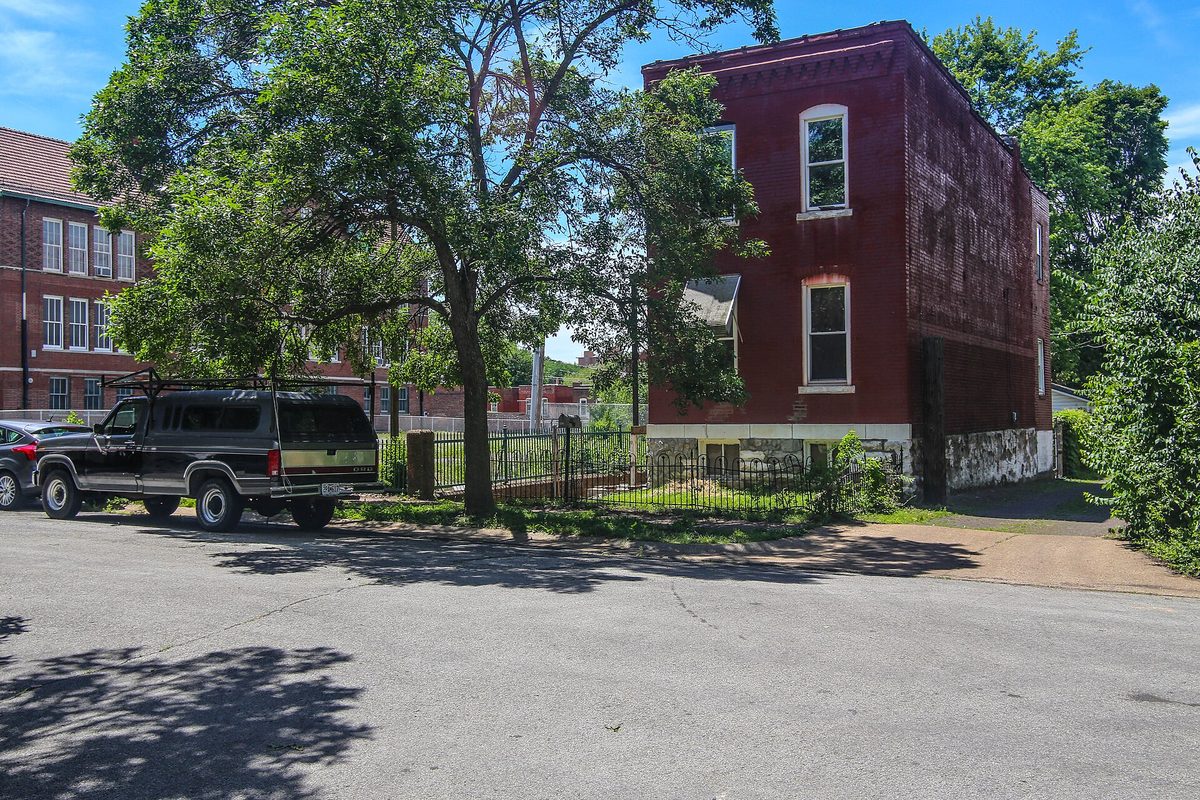
Cherokee Antique Row doesn't do curated. Six blocks of Cherokee Street, more than thirty independent shops, and whatever happened to come through the door that week — furniture, china, vinyl, vintage clothes, a salvaged mantel, a saxophone with a hundred years on it. It's the kind of district that rewards people willing to actually poke around rather than shop from a list, and St. Louis has kept it running that way since the 1940s.
A heart condition started it all
Cherokee Street traded in ordinary dry goods and hardware long before anyone called it an antiques district. That changed in 1945, when a man named Ambrose Christopher Daues had a heart condition that forced him out of his previous line of work. His family opened Homemaker Antiques on Cherokee Street instead, dealing in Depression glass, Indian pottery, and cut glass out of a storefront that had been built for something else entirely. It stuck.
Where one dealer survives, ten thrive
What happened next is the logic every antique district eventually runs on: a shopper will drive across a metro area for a whole street of dealers, but rarely for just one. Over the following decades, more antique sellers filled in the Victorian storefronts up and down the block, until the stretch between Jefferson and Lemp avenues had become recognizable as its own thing. The city made it official in 1980, designating the area a local historic district. It sits inside the wider Cherokee-Lemp Historic District, eleven blocks and eighty-one buildings in all, most of them put up between the late 1860s and 1915 — old enough that plenty of what's for sale inside is younger than the building holding it.
What's actually on the shelves
The shops belong to the Cherokee Antique Row Merchants Association, and each one is its own business rather than a branch of anything — part of why no two trips here look the same. Elder's Antiques, at 2124 Cherokee, is the row's best-known name: a four-generation, family-run operation with roots in the early 1980s. Cherri Elder and her husband David took over the building around 2000, and today Cherri's daughters, Cheyenne and Shannon, run daily operations while her brother handles furniture repair and restoration in back. A few doors down, Hammond's Antiques & Books works the printed-page side of the trade, Dead Wax Records covers the row's vinyl crowd, and dealers like Lady Jane's Antiques and Riverside Antiques round out a stretch that moves through furniture, glass and china, vintage clothing, and the occasional salvaged door or mantel, depending entirely on what came in that week.
Two collections nobody expects
Two shops on the row have quietly become destinations of their own for people who don't care about antiques at all. Saxquest, at 2114 Cherokee, is a working vintage-and-professional saxophone shop and repair studio, family-run for more than 25 years, that keeps a free public museum of rare saxophones on its second floor — historically significant horns and saxophone memorabilia, open to browse during store hours (Monday through Friday, 9 a.m. to 6 p.m., and Saturday, 10 a.m. to 2 p.m.). Down at 2308 Cherokee, TypOsphere is the other half of that same instinct: a hybrid typewriter museum, repair shop, and gallery opened in 2021 by Louise Marler, a third-generation typewriter specialist. More than 150 manual typewriters live there, including one gifted by Tom Hanks and a rare Blickensderfer No. 5 dating to the 1890s, with typing stations set up for anyone who wants to feel what a keystroke used to sound like.
When to go
Individual shop hours vary dealer to dealer, so it's worth a quick check before making a special trip for one shop in particular. The Cherokee Antique Row Merchants Association runs the events that bring the whole street out at once: the Cherokee Caravan every Memorial Day, First Thursdays gallery walks, and a Christmas Cookie Spree each December. Cherokee Street ends at Lemp Avenue right by the historic Lemp Brewery complex, an easy add-on stop once the shops start closing for the day.
Nearby stays
No Airbnb on Cherokee Antique Row yet
VisitingSTL doesn't feature a stay on the row itself yet, but the Soulard property is about two miles away — a six-minute drive to spend an afternoon digging through six blocks of somebody else's history.
See Places to Stay →Quick answers
Where exactly is Cherokee Antique Row?
It runs along Cherokee Street between Jefferson and Lemp avenues in south St. Louis — six blocks holding more than 30 shops.
When did Cherokee Street become an antiques district?
In 1945, when Ambrose Christopher Daues, forced out of his previous career by a heart condition, opened Homemaker Antiques on Cherokee Street. More dealers filled in the surrounding storefronts over the following decades.
Is it only furniture and glassware?
No. Saxquest's vintage saxophone shop and free museum and TypOsphere's working typewriter museum both sit right alongside the traditional antique dealers.
When's the best time to visit?
Shop hours vary dealer to dealer, so it's worth checking ahead. The Cherokee Caravan every Memorial Day and the First Thursdays gallery walks are when the whole row is open at once.
Cherokee Antique Row isn't a place to see in an hour. Budget an afternoon, expect to leave with something you didn't plan on buying, and don't skip the second floor at Saxquest just because you don't play.
← Back to all neighborhoods