Published · Updated
Most cities have a big park. Forest Park is closer to a district of its own: about 1,300 acres with five major cultural institutions inside it, and no admission fee to the park itself. Show up without a plan and it still works; show up with one and it fills a day.
Opened in 1876, and meant to stay open
Forest Park was dedicated on June 24, 1876, to a crowd of about 50,000. The park's own timeline quotes the dedication's promise that it was for “the enjoyment of yourselves, your children and your children's children forever,” with no sign telling anyone to keep off the grass. Streetcar lines reached it in 1885, and by 1896 seven lines were carrying more than 2.5 million riders a year. Then the city won the World's Fair.
1904, and what is still standing
The Louisiana Purchase Exposition ran from April 30 to December 1, 1904, and drew more than 20 million people. Most of it was built to be torn down, and was. A few pieces were not.
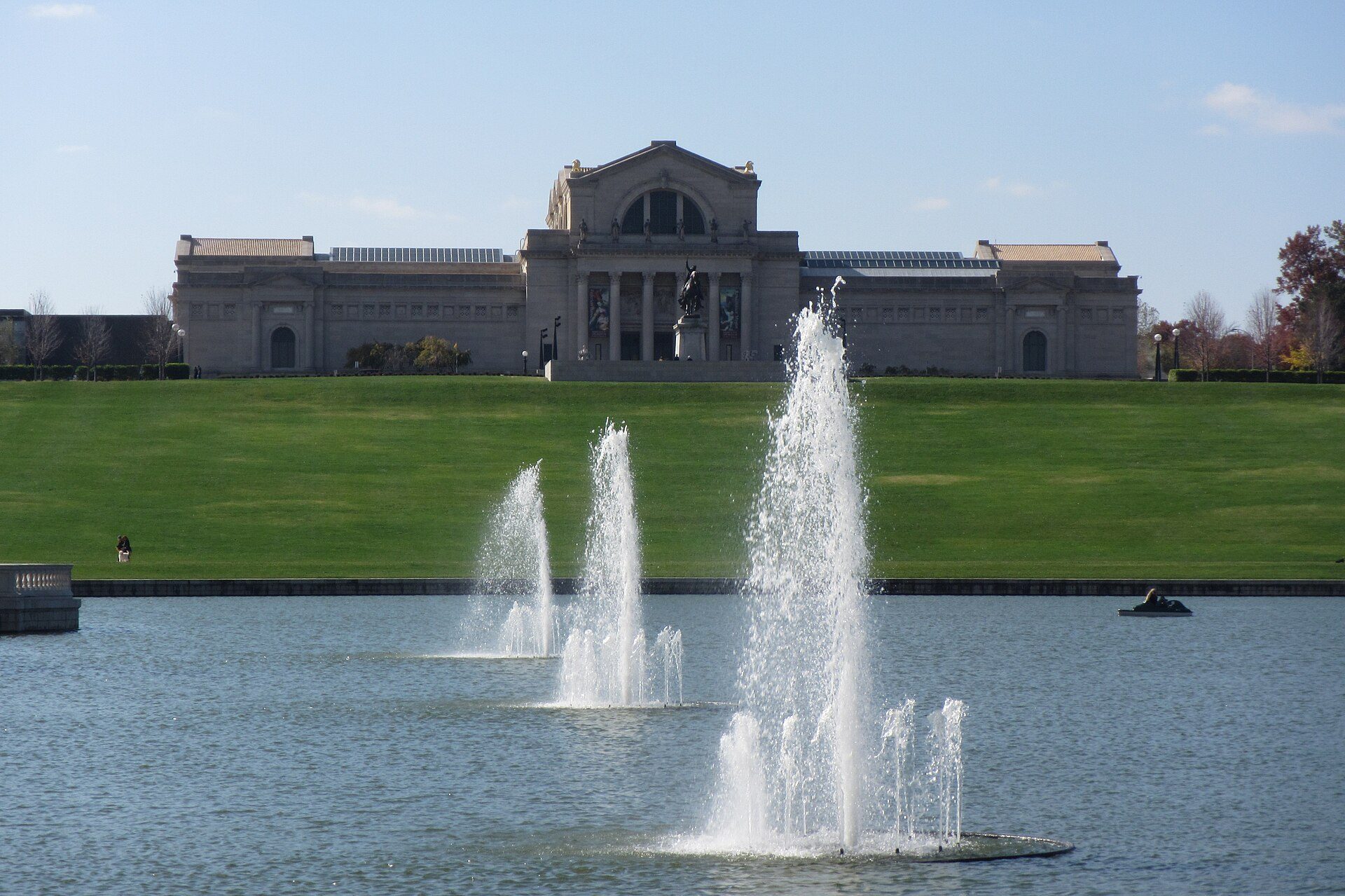
The Saint Louis Art Museum, on Art Hill, is the one permanent building from the Fair. Cass Gilbert designed it as the core of the Fair's Palace of Fine Arts, which showed about 11,000 works from 26 countries; the temporary wings are long gone, and the museum's own account calls the main building the sole survivor. Admission is free every day.
Down in the Saint Louis Zoo, the 1904 Flight Cage is the other survivor. The Smithsonian commissioned it for the Fair and planned to move it to Washington afterward. St. Louisans objected, the city bought it for $3,500 (it had cost $17,500 to build), and the Zoo says that led to what became the first municipally supported zoo in the world. The Zoo is free every day. The Missouri History Museum keeps a 1904 World's Fair exhibit and is free to enter too.
At the foot of Art Hill, the Grand Basin was restored in 2003 and is now one of the park's most photographed spots.
What the park picked up afterward
The Muny calls itself the nation's oldest and largest outdoor musical theatre and has run for more than a century. The Jewel Box, a glass conservatory, opened on November 14, 1936, with Public Works Administration support, and reopened in 2003 with room for events. In 1927, more than 100,000 people packed Art Hill to welcome Charles Lindbergh home from Paris.
The park needed work by the late 20th century. Forest Park Forever, a nonprofit conservancy, was founded in 1986 to partner with the city on the backlog, and a 1995-96 master plan and “Restoring the Glory” campaign raised $94 million. What visitors see now is largely the result.
A day in the park
The park has 30 miles of paths and trails, a Nature Playscape for small children, and the Dennis & Judith Jones Visitor and Education Center at 5595 Grand Drive. A reasonable order: a morning at the Zoo, lunch near the Boathouse, an afternoon on Art Hill and inside the Art Museum, and a Muny night if it's summer. The Saint Louis Science Center is the fifth of the park's major institutions; check its own site for what it charges.
Forest Park turned 150 on June 24, 2026. The Missouri History Museum is running an exhibit called “Yours Forever: Forest Park at 150,” and Forest Park Forever says a new destination, The Glade, is due by the end of 2026. Current details are on the conservancy's official page, forestparkforever.org.
Stay near Forest Park
First-floor stay on Enright Ave, Central West End
A first-floor stay with a game room and fireplace lounge, walkable to Forest Park per its listing. Booked directly on Airbnb.
View & Book on Airbnb →Quick answers
Is Forest Park free to visit?
The park is free, and so are the Saint Louis Zoo and the Saint Louis Art Museum every day. The Missouri History Museum is free as well.
What is left of the 1904 World's Fair in Forest Park?
The Saint Louis Art Museum's main building is the only permanent structure built for the Fair that still stands. The Zoo's 1904 Flight Cage, built for the Fair, also remains, and the Grand Basin sits at the foot of Art Hill.
How big is Forest Park?
About 1,300 acres, with 30 miles of paths and trails, according to Forest Park Forever.
What is there to do in Forest Park besides the museums?
The Muny, a Jewel Box conservatory that opened in 1936, a Nature Playscape, miles of paths, and Art Hill. The park turned 150 on June 24, 2026.